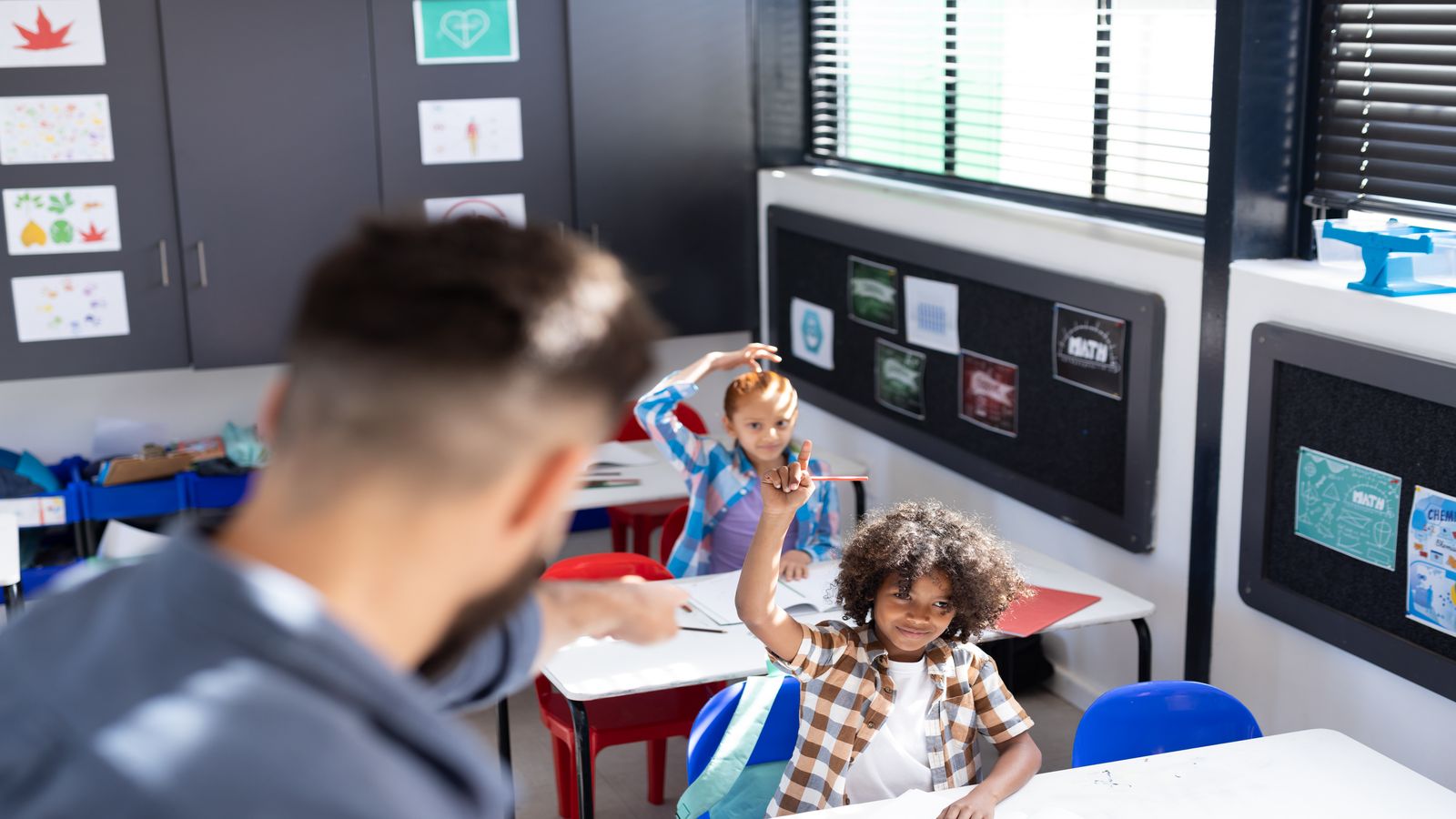
Teachers in the UK spend, on average, fewer than half their working hours actually teaching. The rest is consumed by marking, administrative reporting, resource preparation, data entry, and compliance tasks. Every hour a teacher spends on paperwork is an hour they can't spend giving you feedback, adapting lessons, or having the one-to-one conversations that make the biggest difference to learning outcomes.
AI is starting to change this equation. Automated marking of objective assessments, AI-assisted resource creation, streamlined reporting, and intelligent scheduling are freeing up teacher time in schools that adopt them. This guide covers what these changes look like, how they affect your learning experience as a student, where the limits and risks are, and what you can do to benefit from the shift. For the student perspective on teacher burnout, see our guide on teacher burnout and student success.
The teacher workload problem
Where the time goes
Research by the Department for Education consistently shows that UK teachers work 50+ hours per week, with teaching time comprising less than half. The biggest non-teaching time drains:
- Marking and assessment (8–10 hours/week). Particularly for essay-based subjects where each piece of work requires detailed, personalised feedback.
- Lesson planning and resource creation (5–7 hours/week). Creating slides, worksheets, differentiated materials, and supplementary resources.
- Administrative tasks (4–6 hours/week). Data entry, attendance recording, report writing, email management, meeting documentation.
- Behavioural management documentation (2–4 hours/week). Logging incidents, communicating with parents, completing pastoral records.
Why this matters to you
When teachers are overwhelmed by administrative tasks, the things that directly affect your learning suffer:
- Feedback becomes slower and less detailed. The teacher who could return your essay in three days with two paragraphs of comments now returns it in two weeks with a grade and a generic comment.
- Lesson quality drops. Lessons become more standardised and less responsive because the teacher doesn't have time to adapt materials to your class's specific needs.
- One-to-one support diminishes. The teacher can't offer individual guidance because they're catching up on marking during what should be office hours.
These aren't complaints about lazy teachers. They're symptoms of a system that asks one person to do more than is physically possible.
How AI is reducing teacher workload
Automated marking of objective assessments
Multiple-choice tests, short-answer quizzes, and structured-response questions can be marked by AI with high accuracy. This saves hours per week for subjects that regularly use these formats.
What it means for you: Faster feedback. If a quiz is marked by AI within minutes rather than days, you get results while the material is still fresh — which makes the feedback far more useful for your learning.
Limitations: AI marking works well for questions with clear right/wrong answers. For essays, extended responses, and creative work, AI marking is less reliable and most schools still use human markers for these.
AI-assisted resource creation
Teachers can use AI to generate first drafts of worksheets, quiz questions, lesson plan structures, and differentiated materials. The teacher then reviews and edits rather than creating from scratch.
What it means for you: Potentially more varied and better-differentiated resources. A teacher who saves three hours on resource creation can spend that time tailoring materials to different ability levels — including yours.
Limitations: AI-generated educational materials need human review. Without teacher oversight, resources may contain inaccuracies, inappropriate difficulty levels, or content that doesn't align with the specific exam board.
Streamlined reporting and administration
AI tools can draft student progress reports, summarise attendance data, and automate routine communications — tasks that previously consumed hours of teacher time.
What it means for you: Teachers spend less time on paperwork and more time being available for teaching and support. Report comments may be drafted by AI but should still be reviewed and personalised by the teacher who actually knows you.
Intelligent scheduling and planning
AI can assist with timetabling, revision schedule suggestions for classes, and identifying students who might need additional support based on performance patterns.
What it means for you: Potentially earlier identification of areas where you're struggling, leading to earlier intervention and support.
The limits of AI in education
What AI can't replace
Despite the efficiency gains, there are aspects of teaching that AI fundamentally cannot replicate:
Relational teaching. The trust, empathy, and genuine human connection between a teacher and student that makes challenging feedback receivable and difficult topics approachable. This is what makes a great teacher great — and it's entirely human.
Real-time adaptation. A skilled teacher reads the room. They see twenty blank faces and change their explanation. They notice one student is upset and adjust their approach. AI doesn't have this perceptual ability in a classroom context.
Moral and ethical guidance. Teachers model values, fairness, and intellectual honesty. They navigate sensitive discussions about ethics, identity, and society. These require human judgement, not pattern matching.
Motivational coaching. When you're ready to give up on a subject, a teacher who says "I believe you can do this — here's why" carries emotional weight that no AI can match.
Risks of over-automation
There are genuine concerns about AI in education that students should be aware of:
- Data privacy. AI tools that process student work collect data about your performance, writing style, and learning patterns. Understanding how this data is stored, used, and protected is important.
- Over-reliance. If schools cut teacher posts because AI "handles" marking and reporting, the human capacity for relational teaching diminishes — even though that's the part that matters most.
- Standardisation risk. AI-generated resources tend toward homogeneity. If every school uses the same AI tools, there's a risk of educational monoculture where teaching becomes less diverse and creative.
- Accountability gaps. When an AI marks your work incorrectly or a generated resource contains errors, who is accountable? Clear human oversight remains essential.
How to benefit from the shift
As AI takes over more administrative tasks in your school, here's how to make the most of the resulting changes:
Take advantage of faster feedback
If your teacher uses AI-assisted marking for quizzes and objective assessments, you'll get results faster. Use them immediately:
- Review your wrong answers the same day you receive them
- Identify the pattern in your errors (conceptual gaps vs. careless mistakes)
- Target those specific gaps in your next study session
Fast feedback only helps if you act on it quickly. Don't just note the score and move on.
Engage with improved resources
If your teachers have more time to create differentiated resources, engage with them. If extension materials are available, use them. If resources come at different difficulty levels, honestly assess which level matches your current understanding and work from there.
Use the freed teacher time
If your teacher has more availability for one-to-one support, use it. Prepare specific questions. Come with focused requests: "Could you look at my essay structure?" or "I'm confused about this specific concept." Specific requests get better help than general "I don't get it" requests. For more on productive teacher interactions, see our guide on teacher burnout and student success.
Develop your own AI-critical skills
As AI becomes more present in your educational experience, developing your own AI literacy becomes increasingly important. Understand what AI-generated content looks like, what its limitations are, and how to evaluate it critically.
Do this today
- [ ] Ask your teacher whether any AI tools are being used in your course for marking, resources, or reporting
- [ ] If you receive AI-marked quiz results, review your errors and create a targeted study plan for the gaps within 24 hours
- [ ] If your teacher has office hours or availability, prepare one specific question to ask this week
- [ ] Start developing your AI literacy using the practices in our AI literacy guide
- [ ] Check whether your school has a published policy on AI use in teaching — it's useful to know what tools are in play
Common mistakes
"AI marking means less accurate marking." For objective assessments (multiple choice, short answer with clear correct answers), AI marking is extremely accurate — often more consistent than human marking. The concern applies to subjective assessments (essays, creative work), which still need human judgement.
"If AI does the admin, teachers will have less to do." The goal isn't to give teachers less to do — it's to redirect their time from administrative tasks to teaching tasks. The schools that use AI well don't cut staff; they improve the quality of teaching.
"AI-generated resources are lower quality." AI-generated draft resources reviewed and edited by an experienced teacher can be as good as or better than resources created from scratch — because the teacher saves time on the first draft and spends more time on refinement and customisation.
"This doesn't affect me as a student." It does. The quality of feedback you receive, the availability of your teachers, the variety of resources, and the speed of assessment all directly affect your learning outcomes. Understanding how your school uses AI helps you make the most of these changes.
Frequently asked questions
Should I trust AI-marked assessments?
For objective formats (MCQ, short answer, numerical), yes — AI marking is highly reliable. For subjective assessments, ask whether a human reviewed the AI's marks. If not, and you disagree with a grade, request a human review.
Will AI replace teachers?
Not in any foreseeable future. AI handles tasks; teachers manage relationships, adapt to individuals, and provide the human elements that make education transformative. The best outcomes come from teachers supported by AI, not replaced by it.
How do I know if my teacher is using AI?
Ask. Many schools are increasingly transparent about AI use in teaching. If your resources, feedback, or reports seem different from previous terms, a conversation about what tools are being used is entirely reasonable.
Is it fair that some schools have AI tools and others don't?
This is a genuine equity concern. Schools with more resources tend to adopt AI tools earlier, potentially creating a quality gap. Advocacy for equitable access to educational technology is important — but in the meantime, your own study skills and self-regulation are the great equaliser.